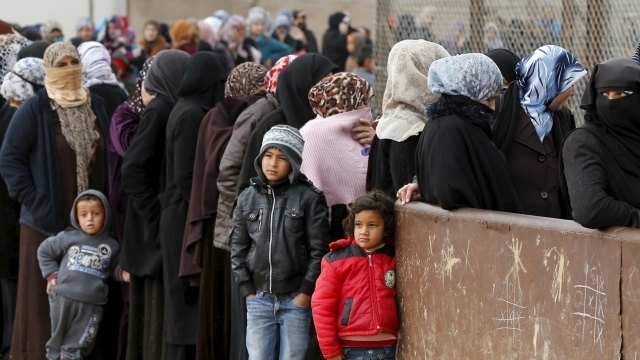
According to Amnesty International Turkey is not is not a safe country for Syrian refugees.
The rights group reveals that Ankara has been forcing thousands of Syrians to go back to their war-torn homeland.
Large-scale forced returns of refugees from Turkey to war-ravaged Syria expose the fatal flaws in a refugee deal signed between Turkey and the European Union earlier this month, Amnesty International said in a statement published on 1 April, 2015.
Based on a research carried out by the organization, Turkish government has been expelling groups of around 100 Syrian refugees to Syria on a daily basis since mid-January. Over three days last week, Amnesty International researchers gathered multiple testimonies of large-scale returns from Hatay province, confirming a practice that is an open secret in the region.
“In their desperation to seal their borders, EU leaders have willfully ignored the simplest of facts: Turkey is not a safe country for Syrian refugees and is getting less safe by the day,” said John Dalhuisen, Amnesty International’s Director for Europe and Central Asia.
"The Turkish government needs to stop this blatantly illegal and inhumane practice,” he added.
"There is no room for any practice to be returning any individuals to a conflict zone. In turn, the EU must be encouraging Turkey to stop this and certainly cannot even contemplate returning Syrians when any real risk of sending them back to Syria from Turkey exists".
“It seems highly likely that Turkey has returned several thousand refugees to Syria in the last seven to nine weeks. If the agreement proceeds as planned, there is a very real risk that some of those the EU sends back to Turkey will suffer the same fate.”
“Far from pressuring Turkey to improve the protection it offers Syrian refugees, the EU is in fact incentivizing the opposite,” said John Dalhuisen.
As the Greek parliament passed legislation on Friday needed for the deal to be implemented, Turkey’s foreign ministry denied authorities were sending Syrians back against their will. A spokesman for the European Commission said it took the allegations seriously and would raise them with Ankara.
For those on the frontline, Monday is looming ominously. More than 50,000 migrants and refugees are stranded behind closed borders in Greece. Their future looks more uncertain than ever.
/257